The Sebum Deficit
Every hair follicle on your face is paired with a sebaceous gland that produces a finite amount of sebum (natural oil) daily. When facial hair is kept at stubble length, this natural oil production is sufficient to coat the hair shaft and moisturize the skin beneath.
However, as beard length increases past 2-3 weeks of growth, the volume of hair exponentially outweighs the sebaceous gland's output capacity. The result is a structural deficit: the long hairs wick moisture away from the skin, leading to severe dryness, flaking ("beardruff"), and structural weakening of the hair shaft.
Carrier Oils vs. Essential Oils
A precision beard oil formulation relies heavily on the quality of its carrier oils. These make up 98% of the product and do the heavy lifting of lipid replacement.
- Jojoba Oil: Biomimetically similar to human sebum. Absorbs rapidly without a greasy finish.
- Argan Oil: Rich in Vitamin E and fatty acids; fortifies the hair cuticle.
- Grapeseed Oil: Highly astringent and lightweight; excellent for acne-prone skin under the beard.
Essential oils (like cedarwood, sandalwood, or peppermint) make up the remaining 2% and are purely for olfactory experience and mild antimicrobial properties.
Application Protocol
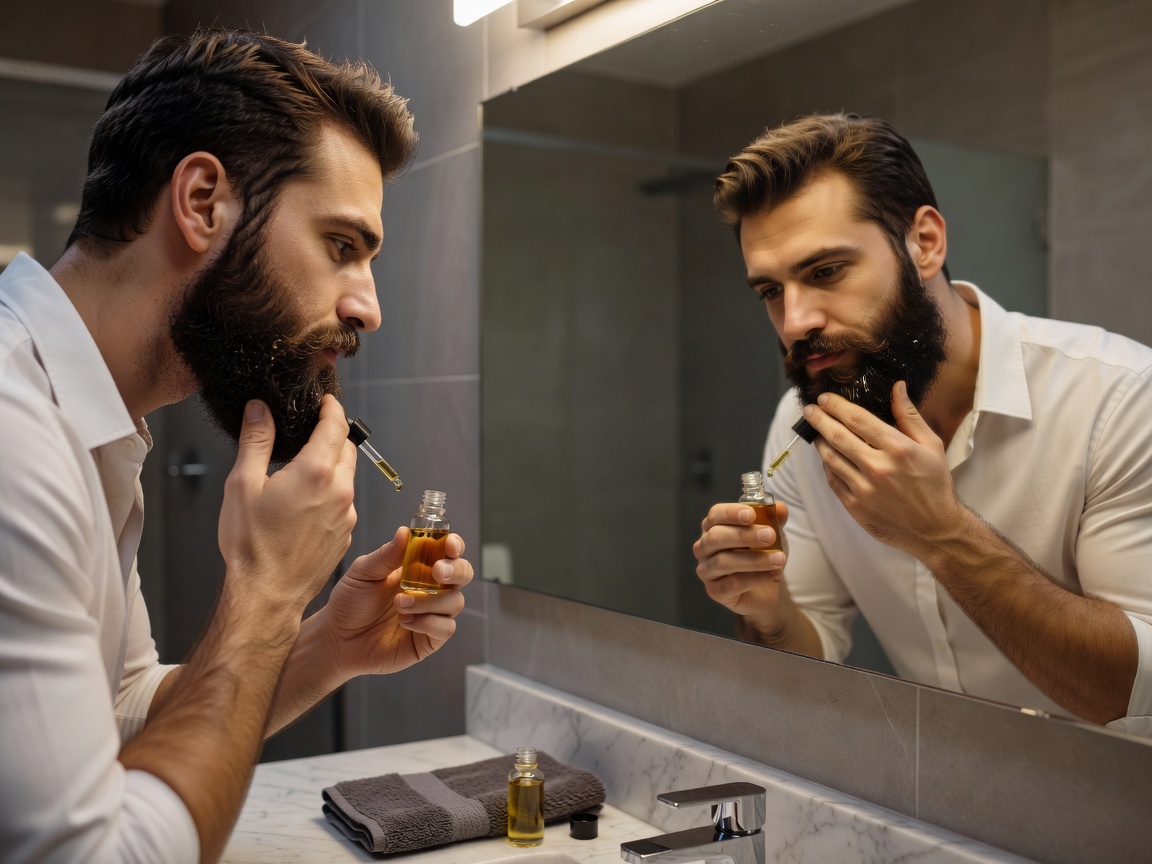
Applying oil to a dry beard is highly inefficient. The optimal window for application is immediately post-shower. Warm water opens the hair cuticle, and towel-drying leaves the hair slightly damp. Massaging 3-5 drops of oil into the skin (not just the hair surface) traps this ambient moisture, creating a lasting hydration barrier.